opinion · Editorial
The first version of a story is a draft, so read it like one
Early reports are often incomplete. That is a reason to read them carefully, not a reason to ignore them.
Estimated 1 min read
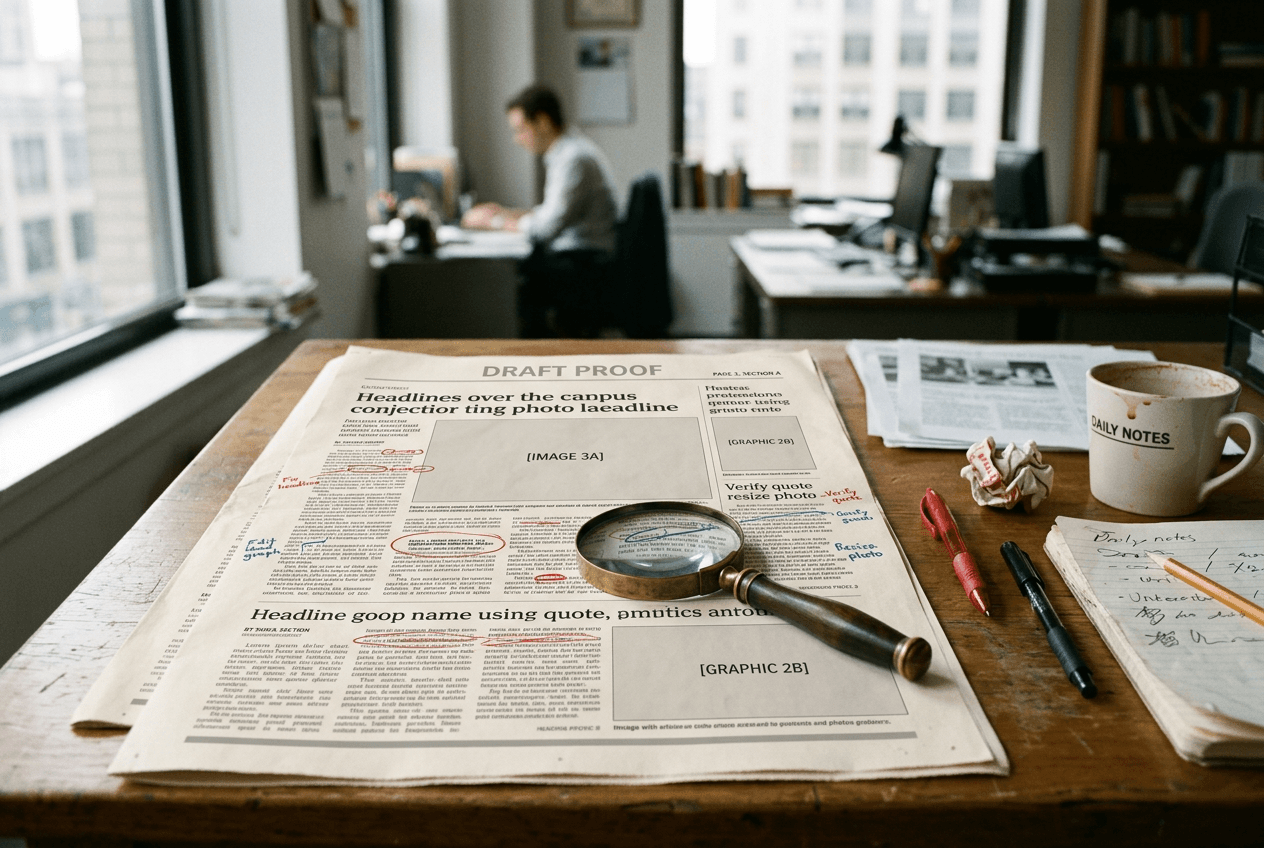
The first hour of a big story is the hour with the least information and the most attention. Officials are still counting, witnesses saw only part of the scene, and reporters are working from whatever can be reached by phone. Numbers move. Sometimes the basic account moves too.
This does not make early reporting worthless. A reader who knows that a road is closed or a recall has been announced can act on it. The trouble starts when a provisional figure is repeated as a settled one, stripped of the words that said it was provisional.
Three questions worth asking
- Who is the source of this specific claim, and how would they know it?
- What does the report say is still unknown?
- Has the publisher updated the story since you first saw it?
A good report answers the first two on the page. When it does not, waiting an afternoon costs very little. Sharing a wrong figure with fifty people costs more, and the correction rarely reaches all of them.
Think we got something wrong? Read the log or tell us.